Peruvian Guano: Why It Was Once Known as the Gold of Peru

Imagine discovering a natural material so valuable that nations competed to control it, ships crossed oceans to transport it, and farmers around the world relied on it to grow food.
-
It wasn't gold.
-
It wasn't oil.
-
It wasn't coal.
It was bird droppings.
It may sound unbelievable today, but for much of the nineteenth century Peruvian guano was one of the world's most valuable natural resources. Long before modern synthetic fertilisers existed, it helped farmers improve crop yields and transformed agriculture across Europe and North America.
Even today, more than 150 years later, Peruvian guano remains one of the best-known natural fertilisers in the world. Gardeners value it not because it is fashionable, but because it is naturally rich in nutrients that plants need for healthy growth.
So what exactly is guano, why did it become so famous, and why do many gardeners still choose it today?
Quick Answer
Peruvian guano is a naturally occurring fertiliser formed from the droppings of seabirds living along the Pacific coast of Peru. Over many years, the exceptionally dry climate allows these deposits to accumulate naturally, creating a nutrient-rich material valued for its phosphorus, nitrogen and trace minerals. Its enormous historical importance earned it the nickname "The Gold of Peru."
What Is Guano?
Guano is the natural accumulation of bird or bat droppings that has built up over many years in places where animals gather in large numbers.
Although the word "guano" is often used generally, not all guano is the same.
The two best-known types are:
-
Seabird guano, collected mainly from coastal islands.
-
Bat guano, found inside caves.
Each forms under different conditions and has its own nutrient profile.
When gardeners talk about Peruvian guano, they are almost always referring to seabird guano, collected from islands off the coast of Peru.
Unlike fresh bird droppings found in gardens, Peruvian guano develops naturally over many years. During this time it gradually dries, stabilises and becomes concentrated, creating a nutrient-rich natural fertiliser that has been valued for centuries.
Why Is Peruvian Guano So Special?
You might wonder why Peru became famous for guano while many other countries with seabirds did not.
The answer lies in an extraordinary combination of geography, ocean currents and climate.
Along Peru's Pacific coastline flows the Humboldt Current, one of the world's coldest ocean currents.
Cold water is rich in nutrients, encouraging enormous populations of fish such as anchovies and sardines.
These fish support millions of seabirds, including cormorants, boobies and pelicans.
For thousands of years these birds have returned to the same rocky islands to rest and breed.
Each year they leave behind another layer of guano.
In many parts of the world, rainfall would quickly wash these deposits away.
Peru is different.
Large areas of the Peruvian coast receive very little rainfall, allowing guano to accumulate naturally year after year.
Over decades—and in some places centuries—these deposits become remarkably deep and naturally concentrated.
It is this unique combination of abundant seabirds, nutrient-rich oceans and an exceptionally dry climate that makes Peruvian guano unlike almost any other natural fertiliser.
Did You Know?
The word "guano" comes from the Quechua language, spoken by the Indigenous peoples of the Andes. The original word, wanu, simply means dung used as fertiliser. Long before Europeans discovered its value, Peruvian civilisations were already using guano to improve crop production.

Why Was It Called the "Gold of Peru"?
This is perhaps the most fascinating part of the story.
During the early nineteenth century, agriculture was changing rapidly.
Growing populations meant farmers needed to produce more food than ever before.
The problem was simple:
Soils gradually lose nutrients as crops are harvested.
Without replacing those nutrients, harvests become smaller and less reliable.
At the time, farmers had very few effective fertilisers available.
When European scientists analysed Peruvian guano, they discovered it contained high concentrations of plant nutrients, particularly phosphorus and nitrogen.
Demand exploded.
By the mid-1800s, ships were travelling thousands of miles simply to transport guano from Peru to Europe and North America.
The material became so valuable that governments competed for access to guano-rich islands.
In 1856, the United States even introduced the Guano Islands Act, allowing American citizens to claim unoccupied islands containing commercially valuable guano deposits on behalf of the United States.
Few natural materials have ever had such an extraordinary influence on global agriculture.
For decades, Peru's guano exports generated enormous wealth and helped feed millions of people around the world.
That remarkable history is why Peruvian guano became known as "The Gold of Peru."
Did You Know?
Some historical guano deposits measured several metres deep before harvesting began. Early explorers described entire islands covered almost entirely by layers of naturally accumulated guano.
What Nutrients Does Peruvian Guano Contain?
Plants need a range of nutrients to grow, flower and produce healthy fruit. Peruvian guano naturally contains several of these essential nutrients, although the exact composition varies depending on where it was collected, how old the deposit is and the species of seabirds that produced it.
Rather than thinking of guano as a product with a fixed NPK number, it's better to think of it as a naturally variable fertiliser, much like compost or manure.
Among the most important nutrients found in Peruvian guano are:
-
Phosphorus (P) – essential for root development, flowering and fruit production.
-
Nitrogen (N) – supports healthy leafy growth and chlorophyll production.
-
Potassium (K) – helps regulate water movement within plants and supports overall plant health.
-
Calcium – contributes to healthy cell walls and strong plant tissues.
-
Trace minerals – naturally occurring micronutrients that support many plant processes.
-
Because guano is a natural product, its composition reflects nature rather than a laboratory formula. This natural variation is one of the reasons growers have used it successfully for centuries.
Did You Know?
Every flower, tomato, bean pod or chilli pepper begins with energy produced inside the plant. Phosphorus plays a key role in this energy transfer, helping plants convert sunlight into the growth and flowering we see above ground.
Are There Different Types of Guano?
Yes—and this is one of the biggest misconceptions surrounding guano.
Many people assume that all guano is identical, but the term simply describes naturally accumulated droppings from birds or bats. The nutrient content depends entirely on who produced it, what they eat and where it forms.
The two best-known types are seabird guano and bat guano.
Peruvian Seabird Guano
This is the guano most gardeners are referring to when they mention Peruvian guano.
It comes from seabirds such as:
-
cormorants
-
boobies
-
pelicans
These birds feed almost exclusively on fish from the nutrient-rich Pacific Ocean.
Because fish are naturally rich in minerals, the guano produced by these seabirds is particularly valued for its phosphorus content, along with naturally occurring nitrogen and other essential nutrients.
This is the type most commonly used in horticulture.
Bat Guano
Bat guano forms inside caves rather than on coastal islands.
Unlike seabirds, bats have very different diets depending on the species.
Some feed almost entirely on insects.
Others eat fruit, nectar or pollen.
As a result, bat guano can vary considerably in nutrient composition. There is no single "bat guano analysis" because each deposit reflects the diet of the bat population that produced it.
Historically, bat guano has also been used as a fertiliser in many parts of the world, but it differs from Peruvian seabird guano in both origin and typical nutrient balance.
Why Do Gardeners Still Use Guano Today?
With hundreds of modern fertilisers available, you might wonder why guano is still used at all.
The answer is surprisingly simple.
Many gardeners appreciate guano because it combines a long history of successful use with a naturally derived source of essential plant nutrients.
It is particularly popular among gardeners growing:
-
flowering plants
-
tomatoes
-
chillies
-
peppers
-
fruiting vegetables
-
ornamental plants
-
container-grown plants
-
Rather than replacing good gardening practices, guano is often used as one part of a balanced approach to plant care alongside healthy soil, appropriate watering and suitable fertilisation.
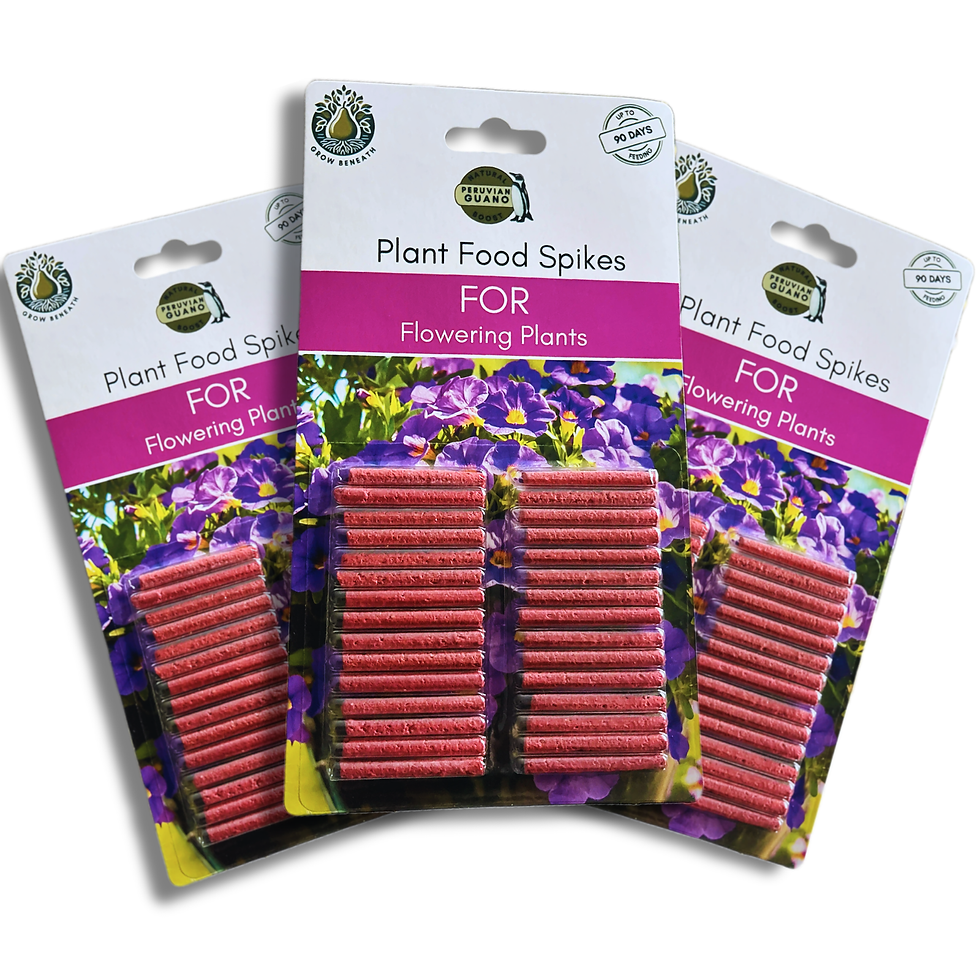
For example, products such as Grow Beneath Plant Food Spikes for Flowering Plants or QuickFeed with Mycorrhizal Fungi include Peruvian Guano as one component of a carefully selected nutrient blend. In this context, it works alongside other ingredients, each chosen for a different role in supporting healthy plant growth.
Is Harvesting Peruvian Guano Sustainable?
This is one of the most important questions surrounding guano today.
At first glance, removing material from islands where millions of birds live might seem harmful.
In reality, modern guano harvesting in Peru is very different from what many people imagine.
Today, the country's most important guano-producing islands are protected and managed by government organisations responsible for conserving wildlife while allowing carefully controlled harvesting.
Collection does not take place throughout the year.
Instead, harvesting is planned around the natural breeding cycle of the seabirds.
Guano is only collected once birds have finished nesting and raising their chicks, helping to minimise disturbance during the most sensitive periods of their lives.
Harvesting also takes place on a rotational basis. Some islands are left untouched for several years, allowing fresh deposits to accumulate naturally before collection begins again.
This approach offers two important benefits:
-
it protects seabird populations by avoiding unnecessary disturbance
-
it allows guano to build up naturally, making it a renewable resource when managed responsibly
The islands themselves are also protected as important wildlife habitats, supporting not only seabirds but many other marine species that depend on these unique coastal ecosystems.
What Most Gardeners Get Wrong
Myth 1: Guano Is Just Bird Droppings
Not quite. Fresh bird droppings and Peruvian guano are very different materials.
Peruvian guano forms naturally over many years in an exceptionally dry climate. During this time, the deposits mature and become naturally concentrated, creating a stable fertiliser rich in plant nutrients.
Myth 2: All Guano Is The Same
False. The nutrient profile of guano depends on:
-
whether it comes from seabirds or bats
-
what the animals eat
-
where the deposits formed
-
how old the deposits are
This is why nutrient analyses can vary considerably between different guano products.
Myth 3: Harvesting Guano Harms Wildlife
Not when it is carried out responsibly.
Modern Peruvian guano harvesting is carefully managed.
Collection avoids nesting seasons, protects breeding colonies and uses rotational harvesting so deposits can regenerate naturally.
In fact, income from responsibly managed guano harvesting helps support the long-term conservation of many protected guano islands and their wildlife.
What Should You Do Next?
If you're interested in growing healthier plants naturally, it's worth remembering that no single ingredient works in isolation.
Healthy plant growth depends on several factors working together:
-
balanced nutrition
-
healthy roots
-
good soil structure
-
consistent watering
-
beneficial soil biology
Natural ingredients can each contribute something different.
For example:
-
Peruvian guano provides naturally derived plant nutrients.
-
Mycorrhizal fungi help plants explore a greater volume of soil for water and nutrients.
-
Beneficial Bacillus bacteria support biological activity around the root zone.
-
Vermiculite helps improve moisture retention and aeration in potting mixes and seed compost.
-
Understanding how each ingredient contributes allows gardeners to make informed choices rather than relying on marketing claims or gardening myths.
Frequently Asked Questions
What is Peruvian guano?
Peruvian guano is a natural fertiliser formed from the accumulated droppings of seabirds living along Peru's Pacific coastline.
Why is Peruvian guano called the Gold of Peru?
Because during the nineteenth century it became one of the world's most valuable natural fertilisers, generating enormous wealth for Peru and helping transform agriculture worldwide.
Is Peruvian guano natural?
Yes. It forms naturally without industrial manufacturing through the accumulation of seabird droppings over many years.
Is guano suitable for flowering plants?
Many gardeners use phosphorus-rich guano when growing flowering and fruiting plants because phosphorus plays an important role in flowering and root development.
What's the difference between seabird guano and bat guano?
Seabird guano comes from coastal bird colonies, while bat guano forms in caves. Their nutrient composition varies depending on the animals' diets and where the deposits formed.
Does guano contain phosphorus?
Yes. Peruvian seabird guano is particularly well known for its naturally occurring phosphorus content.
Can guano be used for vegetables?
Yes. It has traditionally been used on a wide range of crops, including vegetables, although application rates should always follow product instructions.
Is guano suitable for houseplants?
Products containing guano can be used for many houseplants when applied according to the manufacturer's recommendations.
Does guano smell?
Most commercially prepared guano fertilisers have a mild natural odour, although this varies between products.
Is guano environmentally friendly?
Responsibly harvested Peruvian guano is considered a renewable natural resource because collection is carefully managed to protect seabird populations and allow deposits to regenerate naturally.
How long has guano been used as a fertiliser?
Indigenous communities in Peru used guano centuries before it became internationally famous during the nineteenth century.
Why is Peru famous for guano?
Peru's cold Humboldt Current supports enormous fish populations, which in turn feed millions of seabirds. Combined with an exceptionally dry climate, this allows large guano deposits to form naturally.
Is guano better than synthetic fertiliser?
They serve similar purposes but are different products. Guano is a naturally derived fertiliser, while synthetic fertilisers are manufactured industrially. Which is most suitable depends on the crop, growing conditions and the gardener's preferences.
Can guano replace good soil?
No.
Even the best fertiliser cannot compensate for poor soil structure, inadequate watering or unhealthy roots.
Why do modern gardeners still use guano?
Many gardeners value its long history, natural origin and contribution to balanced plant nutrition.
Plant Food Spikes with Peruvian Guano
Discover how naturally sourced Peruvian guano is combined with slow-release nutrition to help support healthy roots, vibrant growth and abundant flowering.