Active Iron Explained: Why Plant Leaves Turn Yellow

-
You've been watering your plant.
-
You've fed it.
-
It's getting plenty of light.
-
Yet the newest leaves are slowly turning yellow while the veins remain bright green.
-
It looks unhealthy.
-
Naturally, most gardeners assume the plant simply needs more fertiliser.
But surprisingly, that isn't always the problem.
In many cases, the soil already contains plenty of iron.
The real issue is that the plant can't absorb it.
This is where Active Iron becomes important.
Understanding how it works can help you recognise one of the most common nutrient problems in gardening and avoid treating it the wrong way.
Quick Answer
Active Iron is a readily available form of iron that plants can absorb more easily than ordinary forms of iron. Iron is essential for producing chlorophyll, the green pigment that allows plants to photosynthesise. When plants cannot access enough iron, new leaves often turn yellow while the veins remain green, a condition commonly known as iron chlorosis.
Why Do Plants Need Iron?
Iron is only needed in tiny amounts, but it plays a huge role inside every healthy plant.
Without enough available iron, plants struggle to produce chlorophyll – the green pigment responsible for capturing sunlight and converting it into energy.
No chlorophyll means less energy.
Less energy means slower growth, weaker plants and pale leaves.
Although iron isn't actually part of the chlorophyll molecule itself, it is essential for making it.
Think of it like a chef in a kitchen.
The chef doesn't become part of the meal, but without the chef, dinner never gets cooked.
Iron works in much the same way.
Why Can't Plants Use the Iron Already in the Soil?
This is probably the biggest misunderstanding among gardeners.
People often think:
"If there's iron in the soil, surely the plant can use it."
Unfortunately, it doesn't work like that.
Iron changes form very easily.
In many soils, especially those that are alkaline or contain a lot of lime, iron becomes locked away in forms that roots cannot absorb efficiently. The nutrient exists, but it isn't available to the plant.
Did You Know?
A plant can suffer from iron deficiency even when plenty of iron is already present in the soil.
The problem is often availability, not the total amount of iron.
So, What Is Active Iron?
Active Iron is iron that has been kept in a form that remains available for plants to absorb.
Instead of quickly becoming unavailable after application, it stays accessible for much longer, giving roots a better chance of taking it up.
This is especially useful in containers, composts and soils where iron would otherwise become difficult for plants to use.
You don't need to remember complicated chemistry.
The important thing is simple:
Ordinary iron may be present. Active Iron is available.
Did You Know?
Active Iron is commonly supplied as chelated iron.
Chelation is simply a way of protecting iron so that it remains available for plants to absorb instead of becoming locked away in the soil.
How Can You Tell if a Plant Needs More Available Iron?
Iron deficiency has one of the easiest nutrient deficiency symptoms to recognise.
Unlike nitrogen deficiency, which usually affects older leaves first, iron deficiency normally appears on new growth.
Look for:
-
Young leaves turning pale yellow
-
Bright green veins that remain visible
-
Overall pale appearance
-
Slower growth
-
Reduced vigour
This pattern is often called iron chlorosis.
However, yellow leaves don't always mean iron deficiency, so it's important not to jump to conclusions.
Which Plants Commonly Experience Iron Deficiency?
Some plants are naturally more sensitive than others.
You may notice iron chlorosis more frequently in:
-
Hydrangeas
-
Gardenias
-
Camellias
-
Rhododendrons
-
Blueberries
-
Citrus trees
-
Azaleas
-
Houseplants grown in containers
These plants often prefer slightly acidic growing conditions.
If they're grown in alkaline soil, they may struggle to access enough iron even when it is present.
Did You Know?
Container plants are often more likely to show nutrient deficiencies because they rely entirely on the growing medium inside the pot.
Unlike garden plants, they can't send roots further in search of nutrients.
Why Healthy Roots Matter
Even the best nutrients are useless if roots cannot absorb them.
Healthy roots are responsible for taking up water, minerals and every essential nutrient a plant needs.
That's why successful gardeners don't just feed the plant.
They look after the roots.
Good watering practices, well-aerated compost and healthy soil biology all help roots function more effectively.
Beneficial mycorrhizal fungi also help many plants increase their access to water and nutrients by extending the effective reach of the root system.
Everything begins below the surface.
What Most Gardeners Get Wrong
Myth 1: Yellow Leaves Always Mean More Fertiliser
Not necessarily.
Adding more fertiliser won't solve an iron availability problem if the plant still can't absorb the iron it needs.
Myth 2: Iron Deficiency Means There's No Iron in the Soil
Usually not.
Very often, the iron is already there. It simply isn't available to the plant.
Myth 3: Every Yellow Leaf Is Caused by Iron
Many different problems can cause leaves to turn yellow.
These include:
-
Overwatering
-
Root damage
-
Nitrogen deficiency
-
Magnesium deficiency
-
Poor drainage
-
Root rot
-
Natural ageing of leaves
Always look at which leaves are affected first before deciding on the cause.
Myth 4: More Iron Is Always Better
Plants need iron, but only in small amounts.
Adding excessive nutrients rarely improves plant health and may create new imbalances.
Balanced nutrition is always the better approach.
How Can You Help Prevent Iron Deficiency?
Fortunately, preventing iron deficiency is often easier than correcting it.
A few simple habits can make a big difference.
Feed plants regularly
Use a balanced fertiliser that supplies essential nutrients, including iron where appropriate.
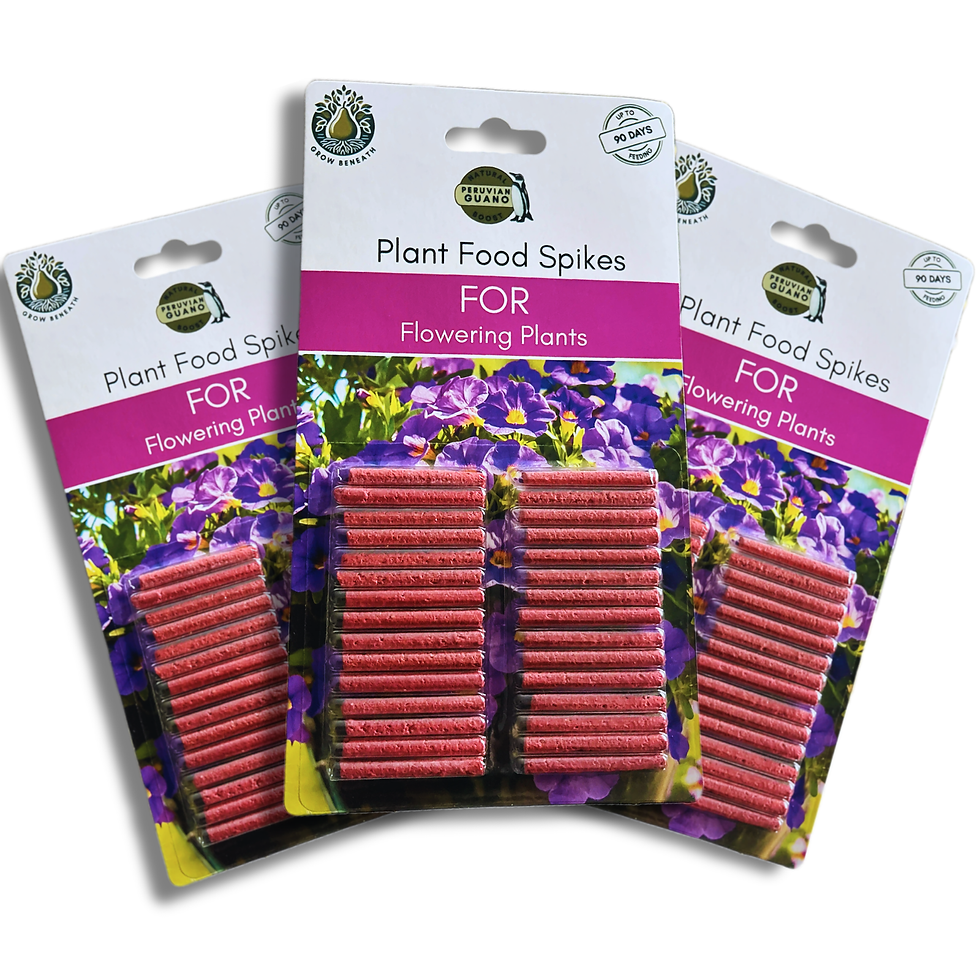
Grow Beneath Plant Food Spikes include Active Iron as part of a balanced nutrient package designed to support healthy green growth over an extended feeding period.
Avoid waterlogged soil
Roots need oxygen as well as water.
Poor drainage reduces their ability to absorb nutrients efficiently.
Look after your roots
Healthy roots absorb nutrients more effectively.
Products containing beneficial mycorrhizal fungi can help establish natural root-fungus relationships that improve access to water and nutrients.
Use the right growing medium
Well-structured compost with good moisture balance helps roots stay healthy.
Fine horticultural vermiculite can improve moisture retention and help create a more stable environment around developing roots.
What Should You Do Next?
If your plant develops yellow leaves, don't immediately reach for more fertiliser.
Instead, ask yourself a few simple questions.
-
Are the newest leaves affected first?
-
Do the veins remain green?
-
Is the soil very alkaline?
-
Has the plant been overwatered?
-
Are the roots healthy?
-
Is the plant growing in an old potting mix?
Taking a moment to identify the real cause usually leads to a much better solution than simply adding more feed.
Healthy leaves start with healthy roots.
Healthy roots begin beneath the soil.
Frequently Asked Questions
What is Active Iron?
Active Iron is a readily available form of iron that plants can absorb more easily.
Is Active Iron the same as chelated iron?
In most gardening products, Active Iron refers to iron supplied in a chelated form that helps keep it available for plant uptake.
Why do leaves turn yellow but the veins stay green?
This is a classic sign of iron chlorosis affecting young leaves.
Is Active Iron a fertiliser?
No. Iron is a micronutrient. It supports normal plant growth but does not replace a balanced fertiliser.
Can houseplants suffer from iron deficiency?
Yes. Container-grown plants can sometimes develop iron deficiency, particularly in older compost or unsuitable growing conditions.
Does overwatering affect iron uptake?
Yes. Waterlogged roots often absorb nutrients less efficiently.
Does soil pH matter?
Very much. High pH can reduce iron availability.
Will Active Iron fix every yellow leaf?
Yellow leaves can have many different causes.
Why are young leaves affected first?
Iron doesn't move easily within the plant, so new growth shows symptoms first.
Do mycorrhizal fungi replace iron?
No. They help plants access nutrients more efficiently but do not replace essential nutrients.
Can I use Active Iron with mycorrhizal fungi?
Yes. Healthy nutrition and healthy root biology complement each other.
Continue exploring the Grow Beneath Knowledge Base to discover how healthy roots, living soil and balanced nutrition work together to support stronger, greener plants.
Healthy Plants Begin Below the Surface
Healthy roots, balanced nutrition and available iron all work together. Explore Grow Beneath products formulated to support strong, healthy growth from the ground up.