What Is The Rhizosphere?

Have you ever wondered why two identical plants growing side by side can perform completely differently?
-
They receive the same sunlight.
-
The same rainfall.
-
The same care.
Yet one thrives while the other struggles.
The answer is often hidden underground.
Not in the roots themselves.
Not even in the soil.
But in a tiny living zone that surrounds every healthy root.
Scientists call it the rhizosphere.
Most gardeners have never heard of it.
Yet it may be the single most important part of the soil ecosystem responsible for healthy growth, nutrient uptake and plant resilience.
Once you understand the rhizosphere, many gardening mysteries suddenly start making sense.
Quick Answer
The rhizosphere is the narrow zone of soil surrounding plant roots that is directly influenced by the root system. It is one of the most biologically active places in the soil, where roots, beneficial fungi, bacteria and other microorganisms interact to help plants access nutrients, absorb water and respond to environmental stress.
So, How Does Rhizosphere Work?
The surprising part is this:
Plants actively feed the rhizosphere.
Roots release compounds known as root exudates.
These include:
-
sugars
-
amino acids
-
organic acids
-
enzymes
-
signalling molecules
Plants can allocate a significant proportion of the carbon they produce through photosynthesis into the rhizosphere, effectively feeding microorganisms around their roots.
Think Of It Like This
-
A plant is effectively paying rent.
-
It releases food into the soil.
-
In return, microorganisms provide services.
-
The relationship benefits both sides.
Did You Know?
Some studies suggest plants under stress may alter their root exudates and encourage microbial communities that help them cope with challenges.
How Plants Recruit Their Own Helpers?
One of the most fascinating discoveries in recent years is that plants are not passive.
Research suggests plants can influence which microorganisms become established around their roots through chemical signalling and root exudates.
In simple terms:
Plants help choose their underground team.
Rhizosphere vs Ordinary Soil
Many gardeners assume all soil behaves the same way.
It doesn't.
What Does A Healthy Rhizosphere Look Like?
You cannot see the rhizosphere directly.
But plants often provide clues.
Signs may include:
-
vigorous root growth
-
strong establishment after planting
-
healthy foliage
-
improved flowering
-
better fruit production
-
improved drought tolerance
-
more resilient growth
A healthy rhizosphere generally supports stronger root systems, which can improve access to water and nutrients.
What Most Gardeners Get Wrong
Mistake 1: Focusing Only On Feeding The Plant
Many gardeners feed leaves.
Successful gardeners feed the soil ecosystem.
Mistake 2: Constantly Disturbing Soil
Excessive digging can disrupt microbial networks and fungal connections.
Mistake 3: Assuming Sterile Soil Is Better
Healthy soil is alive.
Many beneficial organisms are essential for long-term soil function.
Mistake 4: Ignoring Root Health
Everything above ground begins below ground.
Weak roots create weak plants.
What Should You Do Next?
If you want healthier plants, start paying more attention to what happens underground.
Ask yourself:
-
How healthy are my roots?
-
How much biological activity is in my soil?
-
Am I feeding the soil ecosystem as well as the plant?
-
Could my growing conditions support beneficial microorganisms more effectively?
The rhizosphere is often where plant success begins.
How To Improve The Rhizosphere
Fortunately, supporting the rhizosphere is surprisingly simple.
Add Organic Matter - Organic matter feeds beneficial soil organisms and helps build a healthier soil ecosystem.
Avoid Excessive Soil Disturbance - Too much digging can disrupt fungal networks and beneficial microorganisms around plant roots.
Maintain Consistent Moisture - Microbial communities need moisture to stay active. Vermiculite helps retain water around seeds, cuttings and developing roots.
Improve Soil Aeration - Roots need oxygen as well as water. Loose, well-aerated soil encourages stronger root growth and supports beneficial soil life. Materials such as perlite improve aeration, while zeolite helps balance moisture, nutrients and airflow.
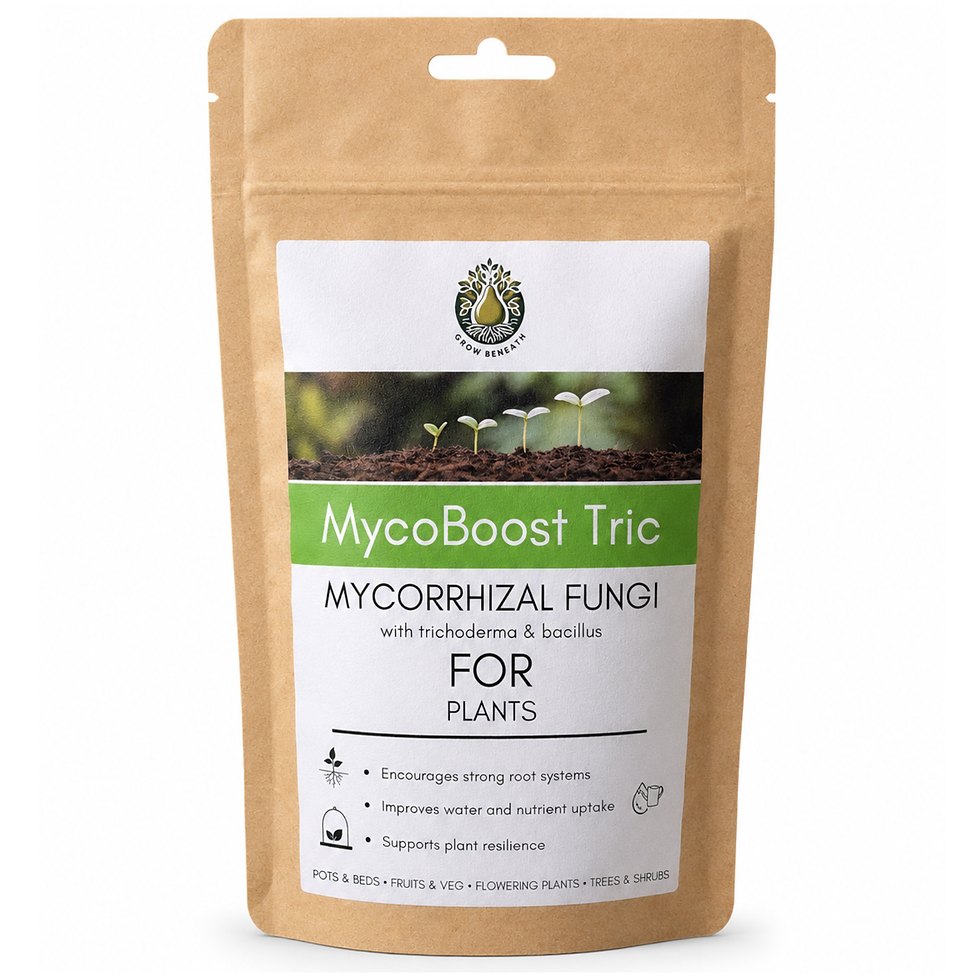
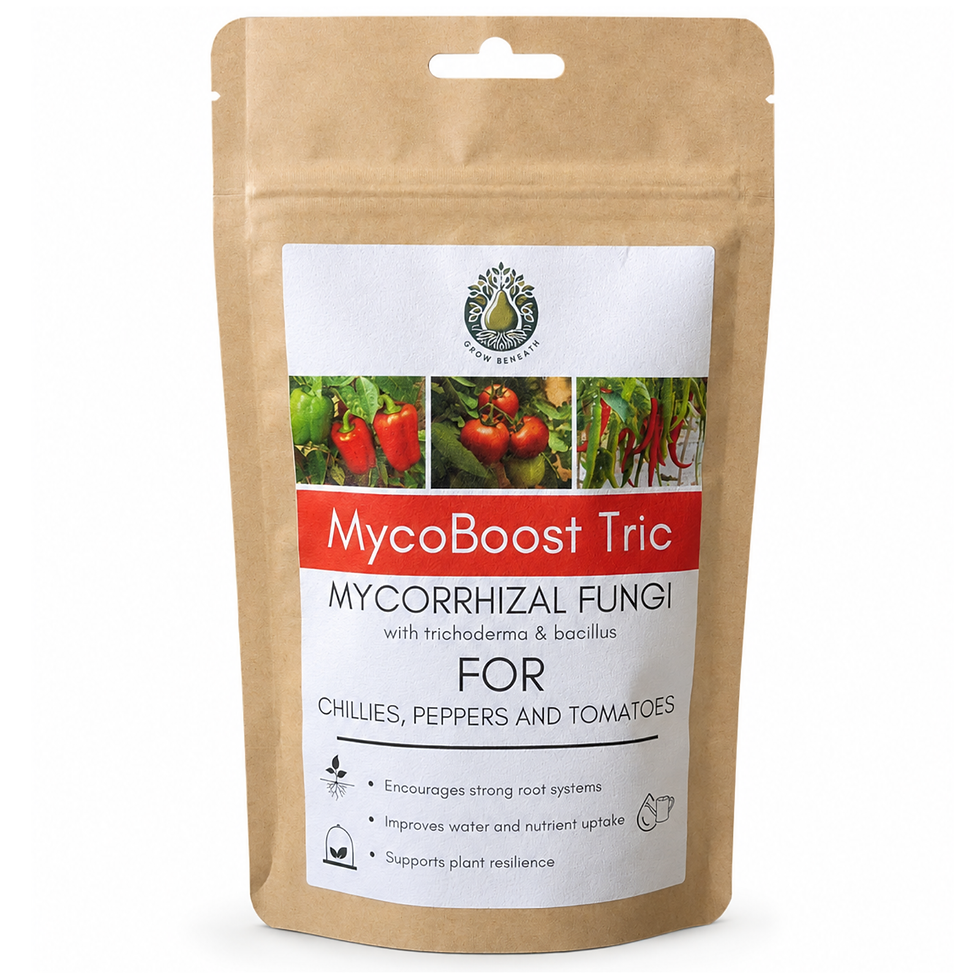
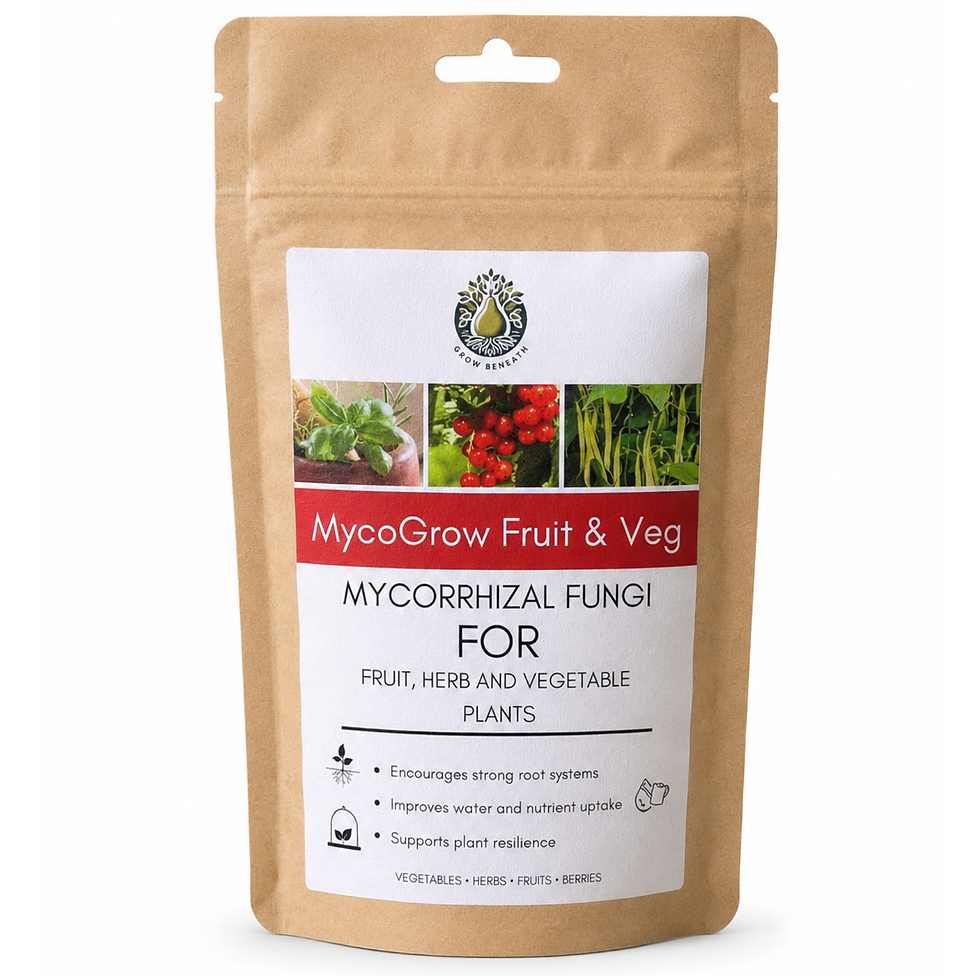
Encourage Beneficial Microorganisms - Products containing mycorrhizal fungi, Trichoderma and beneficial Bacillus bacteria help support a diverse and healthy root-zone ecosystem.
Grow Beneath's MycoGrow and MycoBoost Tric ranges are examples of products designed around beneficial root-zone microorganisms.
Related Products
Interested in supporting a healthy rhizosphere?
The following Grow Beneath products are designed to support root development, beneficial soil biology and healthy growing conditions:
Mycorrhizal Fungi
Helps establish beneficial root–fungus relationships.
MycoBoost Tric
Combines mycorrhizal fungi, Trichoderma and beneficial Bacillus species.
Vermiculite
Improves moisture retention around seeds, cuttings and developing roots.
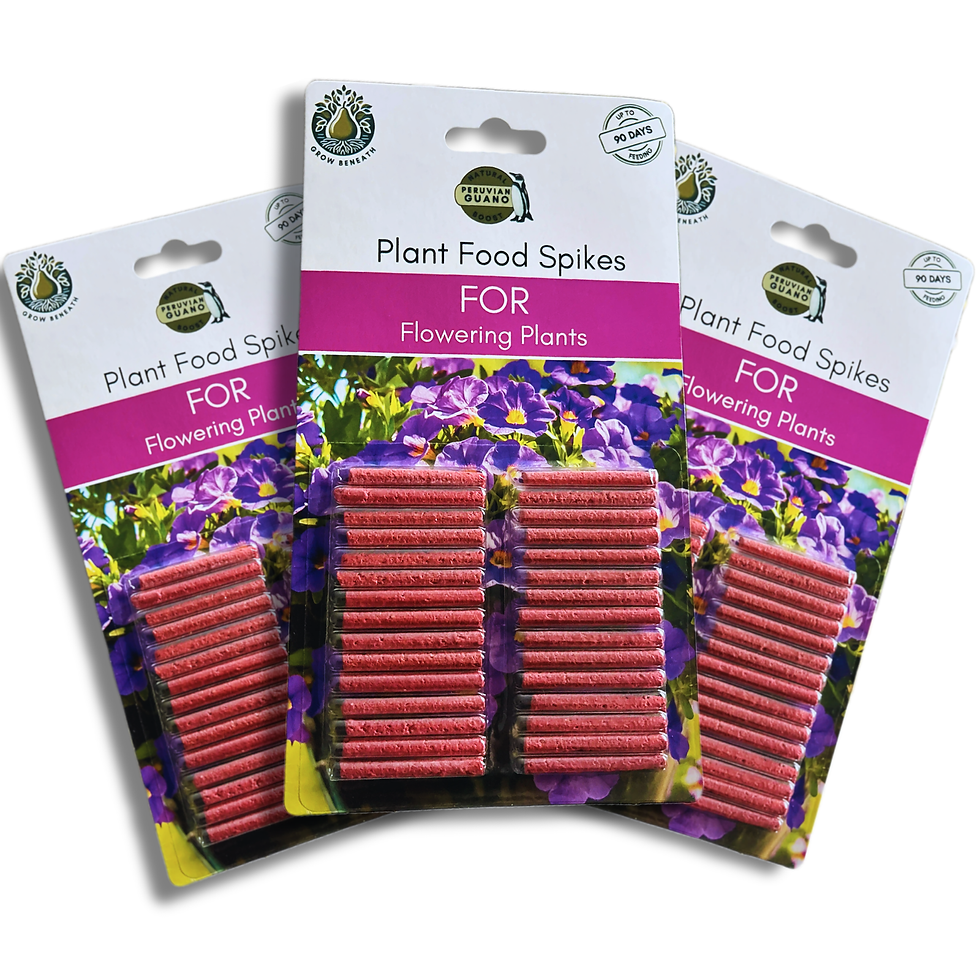
Plant Food Spikes
Provides a steady supply of nutrients for healthy root and plant growth.
Ready to Support Your Plant's Root System?
Discover our Mycorrhizal Inoculants, developed to help beneficial fungi establish around plant roots for stronger, healthier growth.